Structural Drying and Dehumidification in Crowley, TX
Surfaces dry fast; framing, subfloor and slab do not. The drying team sizes air movers and LGR dehumidifiers to the class of loss, logs readings every day and leaves only when materials match a dry reference.
(888) 527-9134Walls still damp? Get drying equipment set up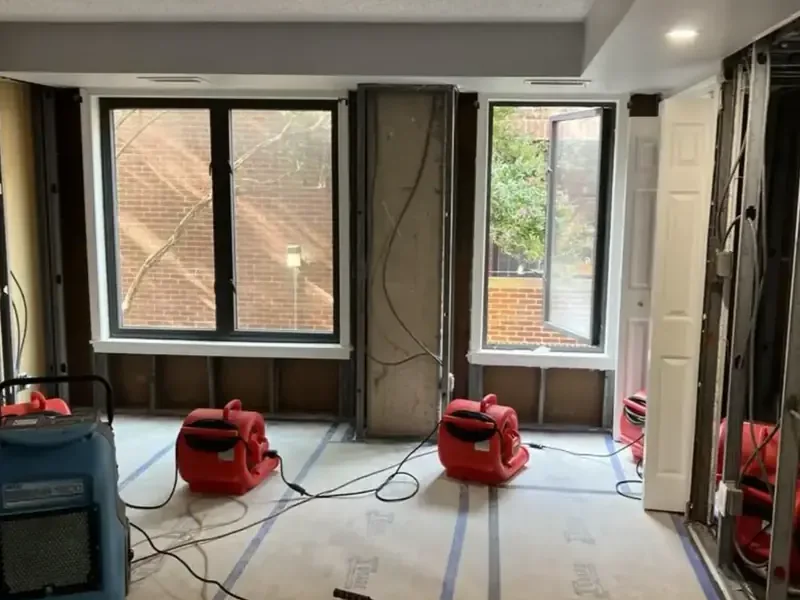
First steps for structural drying and dehumidification in Crowley
- Run the AC. Keep the air conditioner on to help pull humidity.
- Leave equipment on. Do not switch off air movers or dehumidifiers.
- Keep doors as set. The crew sets containment for a reason.
- Note new damp spots. Tell the crew about smells or stains that appear.
What does structural drying and dehumidification cost in Crowley, TX?
In Crowley, TX, structural drying typically runs $1,000 to $9,000, depending on the class of loss, how many rooms need equipment, whether concrete or hardwood is wet and how many days readings take to reach dry.
One or two rooms
- Air movers and one dehumidifier
- Daily readings
- Three to four days
Several rooms, Class 2 to 3
- Multiple dehumidifiers
- Cavity drying
- Four to six days
Class 4, slab or hardwood
- Desiccant drying
- Hardwood drying mats
- Seven days or more
Ranges are typical, not a quote: category of water, square footage, material class and how fast drying started move the number most. Run the water damage cost calculator for a closer range.
How structural drying and dehumidification is handled in Crowley
Moisture gets mapped before any equipment goes down, so the drying plan matches what is actually wet, and equipment stays until the readings say dry.
Set the baseline
Dry reference readings from unaffected materials.
Place equipment
Air movers and dehumidifiers sized to the loss.
Log daily
Readings and adjustments every day.
Confirm dry
Equipment leaves when materials match.
Structural drying is what happens after the water is gone. Drywall, framing, subfloor and concrete keep water inside long after the surface feels dry, and a house that is closed up wet can keep wicking for weeks. The job is to pull that water out on purpose and prove it is gone.
How the drying plan is set
- The class of loss, 1 to 4, sets how much equipment a room needs
- Air movers push dry air across wet surfaces
- LGR dehumidifiers pull moisture out of the air
- Desiccant units dry dense materials like concrete and hardwood
- Cavity drying pushes air inside walls and under cabinets
Readings decide, not the calendar
Every day the drying team logs temperature, humidity and grains per pound in each room, plus moisture readings on the materials. Drying is done when wet materials read within 2 to 4 points of a dry reference in the same house. Those logs go into the claim file.
Humid weather and dense materials
Muggy North Texas air in late spring and summer holds a lot of moisture, which slows evaporation unless dehumidifiers keep the drying area under control. Slab floors take longest; see slab leak water damage. The drying time estimator gives a starting window.
Outside reading: EPA indoor air quality and Ready.gov flood safety.
Structural drying and dehumidification across southern Tarrant County
The restoration team covers ZIP 76036, from the railroad-era blocks along Main Street and the subdivisions off North Crowley Road and FM 1187 to the homes along Deer Creek, West Cleburne Road and Old Granbury Road.
Nearby coverage reaches Burleson, Everman, Forest Hill, Joshua, Benbrook, South Fort Worth.
Related water damage services
Structural Drying and Dehumidification questions in Crowley, TX
Water still spreading?
Still damp after the cleanup? The drying team sets equipment around the clock.
(888) 527-9134 Ask about drying readingsWhy can't the equipment come out when the floor feels dry?
Framing, subfloor and drywall hold water after the surface feels dry. Equipment stays until readings match the dry reference.
How loud is drying equipment?
Air movers and dehumidifiers make steady noise. The crew places them to dry efficiently and can adjust positions for sleeping areas.
What is a dry reference?
A reading taken from the same kind of material in an unaffected part of the house. Wet materials are dry when they read within 2 to 4 points of it.
What is the difference between LGR and desiccant dehumidifiers?
LGR units cool air to condense water out; desiccant units absorb moisture and work better on dense materials and in cooler conditions.
Does insurance pay for drying equipment?
When the loss is covered, drying is usually part of the mitigation. The daily logs show why each piece of equipment was needed.
Damp framing does not dry by itself
Water left in framing, subfloor and slab keeps causing damage. One call gets readings logged and equipment placed.
(888) 527-9134Set up drying equipment today