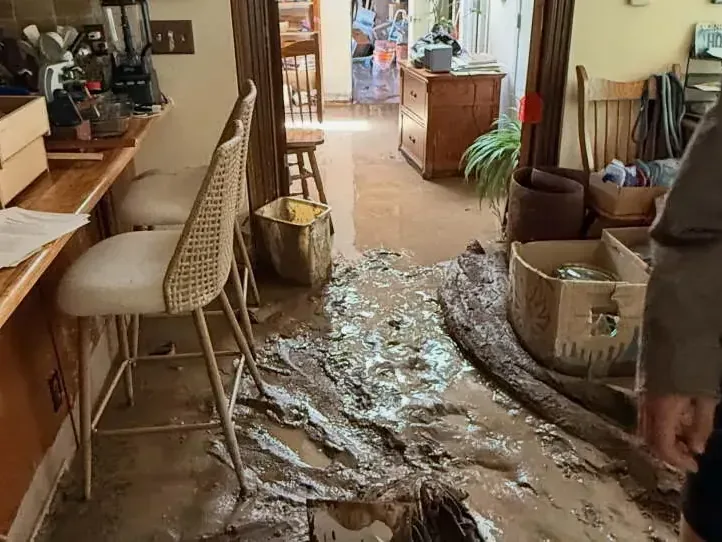
Many people assume a house on higher ground is safe from flooding. The Friday night flash floods of September 2018 showed that a rise in the lot is not protection, and that cleanup choices in the next few days matter as much as the rescue itself.
Key takeaways
- Flash flooding in September 2018 damaged about 70 Forest Hill homes, including some on higher ground, so elevation alone is not protection.
- Floodwater is contaminated, and soaked mattresses, upholstery and carpet are usually too porous to make safe again.
- Airing out belongings helps in the short term but is not a substitute for extraction and structural drying.
- Items placed high before the water arrived were saved in 2018, which makes quick lifting of valuables worth practicing.
- Moisture readings, not appearance, decide when a wet house is actually dry.
What happened in September 2018
Flash floods on a Friday night damaged about 70 homes in Forest Hill. The Forest Hill Fire Department rescued residents from flooded homes, and the city later asked the state for a disaster declaration.
One resident described water reaching homes on higher ground, and a neighbor who sat on a bed floating in the bedroom until the water receded. Those details are a reminder of how quickly a quiet street can turn into a rescue scene.
The fire department operates RESCUE 23, a heavy-duty rescue vehicle that the city says is one of only four in Texas. Rescue came first in 2018, but cleanup began the moment the water went down.
Why higher ground did not keep floors dry
Forest Hill sits between Fort Worth and Arlington on the I-20 corridor, and its elevation is about 653 feet. Flash flooding does not follow the neat rules of a hillside.
Water can move across streets, collect behind fences and enter through doors, garage thresholds and low wall openings. A house on a rise can still sit where runoff has nowhere to go.
The takeaway for homeowners is practical: a flood plan should not depend on being on high ground.
- Water enters at the lowest door, vent or crack, not only at the lowest lot.
- Fast runoff can overwhelm drains before a storm is over.
- A garage floor that sits lower than the street can act as a basin.
- Homes built across decades have different thresholds and wall heights.
The first hours after the water goes down
Once the area is safe and the electricity is handled, the job is to stop water from soaking deeper. Extraction pulls standing water off floors before it moves into cabinets and wall bottoms.
The water extraction crew starts with the deepest water and works outward. Wet carpet and pad usually come out, and the floor underneath is opened so it can dry.
Lift what can be lifted
Cleanup after the 2018 flood included saving items placed high. Photo albums, papers, electronics and small keepsakes on upper shelves often survive when the water stays below them.
Separate what the water touched
Anything the floodwater reached goes in a separate pile. Mixing wet and dry belongings spreads contamination and makes later sorting harder.
Mattresses, upholstery and the airing-out question
After the 2018 flood, residents aired out mattresses that water had reached. That is an understandable first move when a family has few dry beds.
Floodwater is contaminated, though, and a mattress is a thick layer of porous material that cannot be fully cleaned. Airing it out may remove the damp smell but does not remove what the water left behind.
Items of real sentimental value are worth asking about before they leave the house, since some can be cleaned by a specialist.
- Mattresses and box springs that floodwater reached are usually replaced.
- Upholstered sofas and chairs soaked by floodwater are normally discarded.
- Hard furniture such as solid wood and metal can often be cleaned and dried.
- Papers and photos can be frozen or dried flat while their value is weighed.
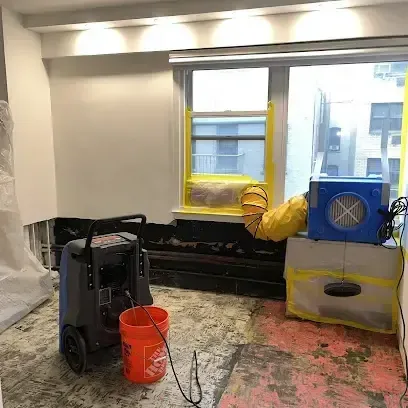
Why airing out is not structural drying
Opening doors and running fans removes surface moisture. It does not reach the water inside wall cavities, under flooring and behind baseboards.
Structural drying uses moisture meters to find water in framing and drywall, then places air movers and dehumidifiers where readings are highest. The work continues until each material reaches its dry standard.
Skipping this step can leave wet framing that smells, stains and invites mold growth, which is why drying is part of any flood cleanup.
- Meters find wetness hidden behind paint and under floors.
- Air movers push dry air across wet surfaces.
- Dehumidifiers remove the moisture that comes out of the materials.
- Readings are checked again, and equipment is adjusted until the numbers settle.
Housing, age and what drying plans must consider
Forest Hill began building homes in the 1940s, and the Trentman Company and the Johnson Campbell Company began building there by 1944. Rapid growth in the 1960s means much of the city's housing dates from the mid to late twentieth century.
A wide mix of build years means walls, floors and trim vary from house to house. A drying plan starts from the materials that actually got wet, not from a template.
The city's population grew from 3,800 in 1967 to 10,250 in 1976, and the 2020 census counted 4,500 housing units. That many structures, built at different times, will not all dry the same way.
Storm and flash flood cleanup therefore starts with an inspection of what the water touched, then sets a plan for removal and drying.
What a thorough flood cleanup includes
A flood cleanup is more than pumping water. It is a sequence, and skipping a step tends to show up weeks later as odor, staining or warped floors.
A written plan helps a homeowner follow the work. Ask the crew to explain which materials are coming out and which will be dried in place, and why.
Smaller homes and larger homes follow the same order. What changes is the amount of equipment and how long the readings take to settle.
- An inspection of every room the water reached, including closets and cabinet bases.
- Extraction of standing water and removal of mud and debris.
- Removal of porous materials that soaked up floodwater.
- Cleaning and disinfecting of hard surfaces and wall cavities.
- Structural drying until moisture readings reach the dry standard.
Records after a flood
The city asked the state for a disaster declaration after the flood. Homeowners who document damage early are better positioned if declarations or relief programs follow.
The drying time estimator gives a rough idea of how long a wet house may need equipment.
- Photograph every room before cleanup starts.
- Keep a list of damaged items and removed materials.
- Save receipts for emergency work and rentals.
- Keep a copy of the drying log and moisture readings.
Questions
Can a house on higher ground still flood in Forest Hill?
Yes. In September 2018, water reached homes on higher ground, so elevation alone does not keep a house dry.
What happened to mattresses after the 2018 flood?
Residents aired out mattresses that water had reached. Because floodwater is contaminated and mattresses are porous, replacement is usually the safer choice.
Is airing out a flooded house enough?
No. Airing out clears surface dampness, but wall cavities, subfloors and framing need structural drying with moisture readings.
What should be saved before floodwater arrives?
Papers, photos, electronics and keepsakes placed on high shelves were saved in 2018. Raising them early costs little and can protect irreplaceable items.