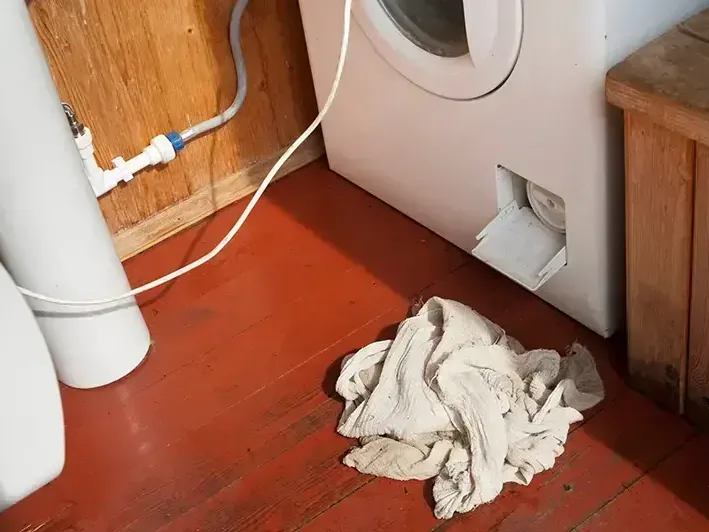
A major water main break on East Main Street caused dry taps and low pressure for Crowley customers. Once pressure returns, the system refills, and any weak point in a house can leak.
Key takeaways
- A precautionary boil water notice, directed by the Texas Commission on Environmental Quality, covered all city water customers, nearly 8,000 households.
- Dry taps and low pressure can leave faucets open, valves half closed and appliances in the wrong state when water returns.
- Pressure surges and air in the pipes can expose weak hoses, fittings and connectors.
- A walk-through of ice makers, dishwashers, washers, toilets and water heaters can catch small leaks before they spread.
- A leak found early is a small cleanup, while a leak found after days is a drying job.
What happened on East Main Street
A major water main break on East Main Street caused dry taps and low pressure. A precautionary boil water notice, directed by the Texas Commission on Environmental Quality, covered all city water customers, nearly 8,000 households.
That is a large share of the city. Crowley had 6,044 households at the 2020 census and 18,070 residents, so most homes felt the disruption in some way.
The boil water notice was about drinking water safety. The leak risk is a separate matter, and it begins when the water comes back.
Why hidden leaks show up when pressure returns
During a loss of pressure, a house sits dry. Faucets that were left open, valves that were turned partway and fixtures that were drained stay in those states.
When the system refills, pressure rises quickly. A hose, fitting or connector that was already weak may fail under the new push, and the leak can start in a closed cabinet or behind a washer.
Most homeowners are not at home when pressure returns, which is why a quiet leak can run for hours before it is seen.
- Air trapped in pipes can make water spit and surge as it clears.
- Open faucets pour until someone notices, and a drain left plugged can overflow.
- Appliances that cycled during the outage may refill without supervision.
- Fixtures that were drained can leak around seals as they pressurize.
A walk-through checklist
A short, methodical walk through the house catches most problems. Start with the main shutoff and move outward.
If anything is wet, close the nearest shutoff and photograph the area before touching it.
- Close every faucet that was left open and check for drips.
- Look under sinks for wet cabinet floors.
- Check the dishwasher, washer and refrigerator water connections.
- Open the ice maker area and look behind the refrigerator.
- Watch the toilet tank for a constant refill or a running sound.
- Look at the water heater base and the pipes above it.
- Check ceilings below bathrooms and laundry rooms for stains.
Appliances and supply hoses
Washing machine hoses, dishwasher lines, ice maker tubing and toilet supplies are small parts that carry steady pressure. They fail without warning and can soak a floor.
The appliance leak water damage service covers extraction and drying for floors, cabinets and wall bottoms after one of these failures. A slow leak under a dishwasher can damage subfloor and cabinets long before a stain shows.
Signs of a slow leak
Warped baseboards, a musty smell, soft floor edges and a water meter that moves when nothing is running all point to a hidden leak.
Signs of a fast leak
A sound of running water, wet floors, dripping from a ceiling or a pooling puddle suggest a hose or fitting has failed.
When a pipe bursts or a joint lets go
Sometimes the failure is bigger than a hose. A split pipe in a wall or a failed connector under a vanity can release water continuously.
In that case, shut off the water at the main, photograph the damage and begin extraction as soon as it is safe. A burst pipe water damage loss often involves the wall, the floor and the ceiling below.
Fast drying matters because wet drywall and insulation can grow mold if left damp.
- Shut off the main valve first.
- Turn off electricity to wet areas if it is safe.
- Move belongings out of the water path.
- Photograph the source and the damage.
- Start extraction and drying.
Water heaters and toilets after an outage
Two fixtures deserve a closer look because they refill on their own. A water heater tank can lose water during low pressure, and it refills when service returns.
A toilet tank can stick open and run until the floor is wet.
A water heater leak can turn a garage or closet floor into standing water quickly, and the damage spreads into drywall and cabinets next to it. A short check right after service returns is cheap compared with the cleanup that follows a missed leak.
- Check around the base of the water heater and look for rust streaks or damp insulation.
- Look at the pipe connections above the tank for drips.
- Lift each toilet tank lid and watch the fill valve shut off cleanly.
- Check the floor around each toilet for dampness.
- Listen for a hiss from the water heater relief valve.
Cleanup and drying after a leak
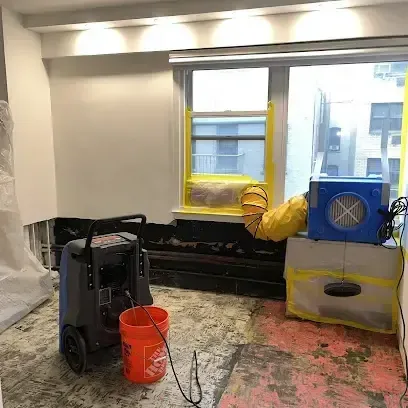
Extraction pulls standing water from the floor. Moisture meters then check subfloor, cabinets and drywall, which can hold water that is not visible.
Air movers and dehumidifiers run until the readings reach the dry standard. Materials that cannot dry, such as swollen particleboard or wet insulation, are removed.
The water damage cost calculator shows how loss size changes the picture, and the service area takes in nearby towns.
- Extraction removes the free water.
- Meters locate hidden moisture.
- Equipment dries the structure on a measured schedule.
- Readings confirm the end of the job.
Habits that help after any outage
Utility problems happen in every city. A few habits reduce the chance of a surprise.
- Turn off the main valve before leaving home during an outage.
- Close faucets and plugs after a shutoff.
- Replace old rubber hoses with braided ones.
- Know where the main shutoff is and test that it turns.
- Check the house again after the system is back, not only the first minute.
Questions
Is the boil water notice the same as a leak warning?
No. The notice was about drinking water safety. Leaks are a separate risk that can begin when pressure returns.
Why do leaks show up after a main break is repaired?
Faucets, valves and appliances are left in odd states during the outage, and returning pressure can expose weak hoses and fittings.
Where should a homeowner look first for a hidden leak?
Under sinks, behind the refrigerator and washer, around the water heater and on ceilings below bathrooms and laundry rooms.
When does a small leak become a drying job?
When water has soaked cabinets, subfloor or drywall. Moisture meters and dehumidifiers are used to dry what the eye cannot see.