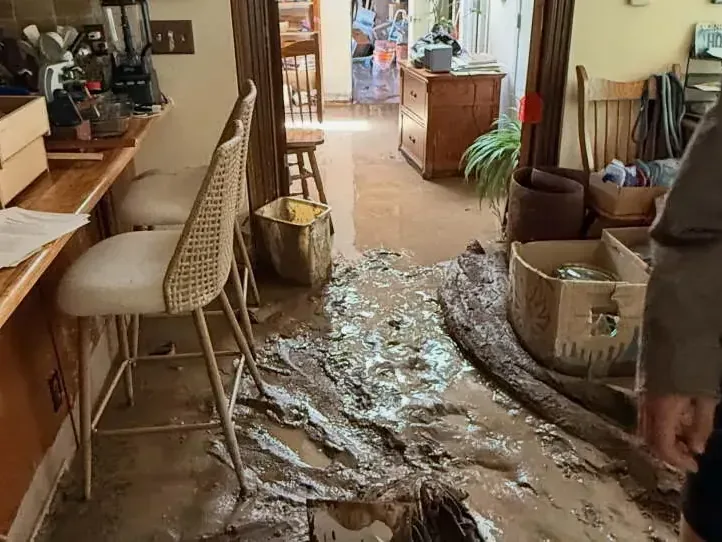
Benbrook is a city with a long record of flooding, and most of it arrives as a flash flood. When a storm drops heavy rain on creeks that already run close to homes, the water moves faster than any forecast can follow.
Key takeaways
- The city has over 1,300 acres of floodplain, about 19 percent of its area, so flood risk is a normal part of local life.
- The city says most flooding happens as flash floods, so advance warning is often hard to give.
- Floodwater is contaminated, so extraction, removal of porous materials and disinfecting come before drying.
- Moisture readings set how long equipment runs, not how a room looks.
- Watching National Weather Service flash flood watches and warnings gives the earliest chance to move belongings.
A city with a long flood history
The city says it has a history of flooding problems. It documents large floods in 1922, 1949, 1961, 1974, 1975, 1982, 1989, 1990, 2004 and 2007.
The city is a suburb in the southwestern corner of Tarrant County, and the 2020 Census counted 24,520 residents and 11,160 housing units. With a city that size, a single storm can touch many households.
The city also has a City-Wide Master Drainage Plan, aimed at inadequate storm drainage systems and floodplains. A plan like that is long-range work, while a flash flood is a same-night event.
Where the water comes from
Benbrook Lake is the main body of water in the city. It was formed in 1952 after the dam was built by the U.S. Army Corps of Engineers, and construction of the dam began in May 1947.
The dam spillway was designed to release flood water from the lake into the channel below the dam, which feeds the Trinity Clear Fork channel. That covers the lake side of the story, and it is a reminder that managing high water here involves both a federal dam and city drainage work.
Residents who want the full picture of local services can start with the local water damage services offered for homes in the city.
On the neighborhood side, large floodplain areas include Mary's Creek, Timber Creek and the Dutch Branch. These creeks and their low land make up over 1,300 acres, about 19 percent of the city.
Why flash floods leave little time
Flash floods form when rain falls faster than the ground and drains can take it. The city notes that advance warning is often hard to give, which is why flash flood watches and warnings from the National Weather Service matter.
A household that has already moved valuables and photographed rooms is better placed when the water arrives.
- A watch means conditions could produce a flash flood, so belongings can be raised early.
- A warning means flooding is happening or about to happen, so safety is the priority.
- Water in a street can reach a doorway before the rain stops.
- Roads and low spots can become impassable well before a creek is full.
What happens inside the house
Once water enters, it spreads across the floor and starts moving upward. Baseboards, drywall and cabinet bases wick water above the waterline, so damage reaches higher than the visible wet area.
Floodwater is also contaminated. Runoff crosses yards and streets before it reaches a door, so it carries soil, fuel and bacteria.
Extraction comes first
The water extraction crew removes standing water with pumps and wet vacuums before it soaks deeper. Speed matters because water left in place keeps spreading.
Then removal of porous materials
Carpet, pad, insulation and the lower part of drywall that soaked up floodwater are usually taken out. Hard surfaces are cleaned and disinfected.
Drying and moisture readings
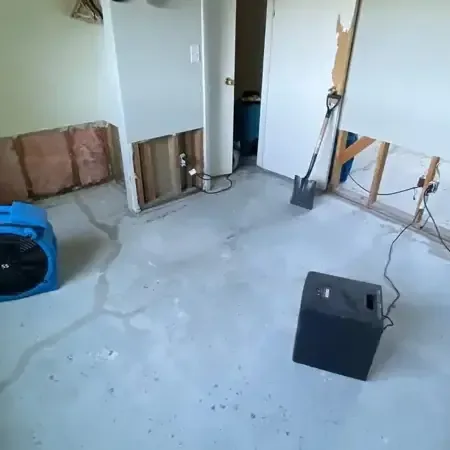
After extraction and removal, the structure still holds moisture. Dehumidifiers and air movers pull it out while moisture meters track progress.
Drying quickly also limits the odor and the chance of mold in damp materials. The storm and flash flood cleanup service ties these steps together.
- Readings are taken on wood, drywall and concrete.
- Equipment is placed where readings are highest.
- Readings are repeated until each material meets its dry standard.
- Equipment leaves only when the numbers confirm the structure is dry.
Preparing before the next storm
A few steps help any household here, whether in Westpark, Whitestone Ranch or elsewhere in the city.
The Benbrook Water Authority maintains a page for reporting leaks, breaks and clogs, and the city's Public Works Department maintains streets, curbs and drainage areas. Knowing both agencies helps when water trouble is not only from a creek.
- Know where the main breaker and the water shutoff are.
- Keep papers, photos and electronics on high shelves.
- Photograph each room so a baseline exists.
- Sign up for National Weather Service alerts for Tarrant County.
- Clear gutters and drains so water has a path away from the house.
What floodwater does beyond the floor
Floodwater does not stop at the carpet. It reaches the lower parts of electrical outlets, heating and cooling equipment, appliances and the bottoms of cabinets.
Treating the whole house, not just the visible floor, is what keeps a flood from becoming a longer repair later. About 35.4 percent of occupied homes here are renter-occupied, so tenants and owners should both know who to contact when water arrives.
- Outlets and switches low on a wall should be checked by a qualified electrician before power is restored.
- Ductwork and equipment at floor level can hold water and debris.
- Refrigerators, washers and dishwashers that stood in water need inspection before use.
- Cabinet bases made of pressed wood often swell and have to be replaced.
After the water: documentation and next steps
Documentation protects the homeowner. Photograph the waterline, the damaged contents and the removed materials before cleanup, then keep receipts for emergency work.
Water damage is not always the result of a flood. A burst pipe or failed hose can also soak a floor, and the cleanup steps for those are similar.
For a loss that spans several rooms, the drying time estimator shows how long equipment might run.
Because the city's flood history is long, many residents have learned that a plan made on a dry day saves hours on a wet one.
Heavy rain can also make low spots on local roads hard to cross. Planning another route before a storm keeps a family from driving into water.
Questions
How much of the city is in a floodplain?
The city reports over 1,300 acres of floodplain, about 19 percent of the city area, including land along Mary's Creek, Timber Creek and the Dutch Branch.
Can a flash flood happen without much warning?
Yes. The city says most flooding happens as flash floods, so advance warning is often hard to give, and National Weather Service watches and warnings are worth following.
Is floodwater different from water from a broken pipe?
Yes. Floodwater runs across yards and streets and is treated as contaminated, so porous materials are usually removed and surfaces disinfected.
How do pros know when a house is dry?
Moisture meters measure wood, drywall and concrete, and equipment stays until readings reach the dry standard.