Structural Drying and Dehumidification in Benbrook, TX
After flash flooding or a pipe leak, the water that cannot be seen is the risk. Air movers and dehumidifiers dry walls, subfloors and concrete here, and moisture readings show when each material is truly dry.
(888) 527-9134Set up the drying equipment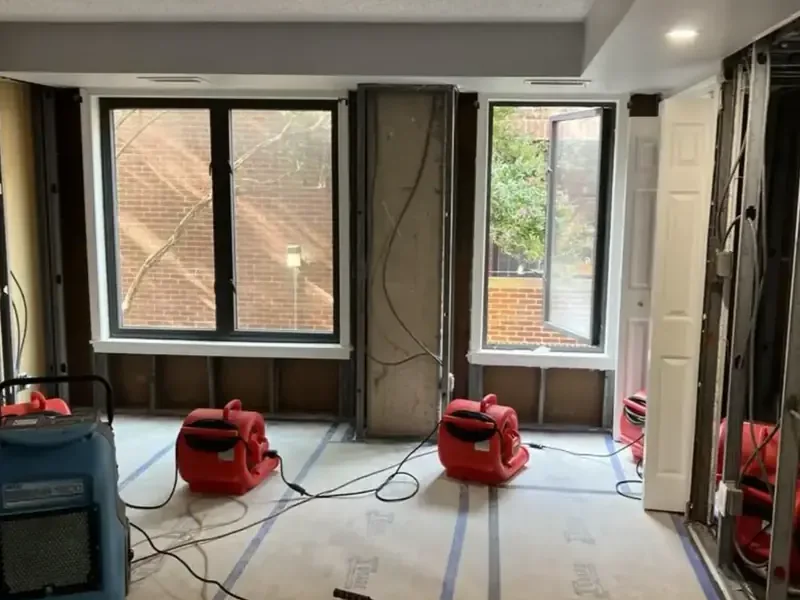
First steps for structural drying and dehumidification in Benbrook
- Take the starting readings. Meters record moisture in every affected material.
- Place the equipment. Air movers and dehumidifiers are sized to the room.
- Recheck each visit. Readings steer equipment moves and added tools.
- Record the finish. Final readings confirm every material is dry.
What does structural drying and dehumidification cost in Benbrook, TX?
One or two rooms run $1,000 to $2,500, several rooms at Class 2 to 3 run $2,500 to $5,500, and Class 4 work in concrete or hardwood runs $5,500 to $9,000 for equipment and monitoring.
One or two rooms
- Equipment set and monitored
- Readings each visit
- Final dry check
Several rooms, Class 2 to 3
- More air movers and dehumidifiers
- Wall cavity drying
- Logs ready for the adjuster
Class 4, concrete or hardwood
- Specialty drying for dense materials
- Extended run time
- Complete reading history
Ranges are typical, not a quote: category of water, square footage, material class and how fast drying started move the number most. Run the water damage cost calculator for a closer range.
How structural drying and dehumidification is handled in Benbrook
Moisture gets mapped before any equipment goes down, so the drying plan matches what is actually wet, and equipment stays until the readings say dry.
Measure
Meters set the starting readings.
Equip
Air movers and dehumidifiers go in.
Monitor
Readings are taken at every visit.
Release
Equipment comes out once goals are met.
Extraction removes standing water, but moisture remains inside framing, subfloors, concrete and cabinets. Structural drying is the stage that pulls it out. Equipment is sized to the room and the material, and readings taken at each visit show whether the drying plan is working or needs to change.
How the equipment works
- Air movers push dry air across wet surfaces
- Dehumidifiers pull vapor out of the air so it can keep absorbing moisture
- Wall cavity drying uses air pushed through small openings
- Moisture meters track each material until it hits its goal
The equipment runs until readings, not the calendar, say the job is done, whichever of the water damage services started the loss.
Classes of water loss
Industry practice sorts losses by how much water and how much material it reached. Class 2 and 3 losses involve carpet, walls or ceilings, while Class 4 losses involve dense materials such as hardwood and concrete that release moisture slowly. Higher classes call for more equipment and longer runs.
Why the job is not done early
Removing equipment too soon leaves moisture behind, which then swells trim, loosens floors and invites mold. Logged readings give the household and the adjuster proof that the structure reached normal levels before repairs started.
Structural drying and dehumidification across Benbrook and nearby communities
Structural drying covers homes and businesses across the city after flash flooding, supply pipe leaks and appliance failures, from Westpark and Whitestone Ranch to the Benbrook Boulevard corridor and the streets near Dutch Branch Park.
The same service nearby: structural drying and dehumidification in Crowley, Everman, Forest Hill.
Related water damage services in Benbrook
Structural Drying and Dehumidification questions in Benbrook, TX
Water still spreading?
Floors still damp days after the water left? Phone the drying team about equipment and readings.
(888) 527-9134 Ask about equipment dryingHow long does structural drying take?
Most jobs run several days. Dense materials like hardwood and concrete take longer, and the readings, not a fixed schedule, decide when the equipment comes out.
Why are dehumidifiers needed along with fans?
Fans move air, but dehumidifiers remove the vapor. Without them the air saturates and drying slows or stops.
Can walls be dried without opening them?
Sometimes. Small holes allow air to flow through cavities, but heavily soaked drywall and insulation usually have to be removed first.
Is structural drying needed after extraction?
Yes. Water extraction clears the water, and drying removes the moisture left inside materials.
What does the drying record show an adjuster?
Daily readings, equipment lists and photos show the structure reached normal moisture, which supports the claim.
Moisture left inside walls keeps doing damage
The drying team sets air movers and dehumidifiers and reads the moisture each visit until every material tests dry.
(888) 527-9134Plan the dry out